Work-Integrated Learning
Turning Words into Work

Career preparation, as a form of experiential learning, helps students translate their academic work into professional skills and opportunities. In the English department, students engage in internships and professional development experiences that build expertise in writing, communication, and critical thinking. These opportunities prepare students to navigate career paths with confidence and a clear sense of how their studies apply beyond the classroom.
Take a look at the English Department’s Experiential Learning Map to see what your four years of progress for our degree plans can look like.
The TCU Center for Career and Professional Development provides many ways for students to prepare themselves for their professional lives. These include:
- Interests, skills, and strengths inventories
- Access to virtual work experiences created by leading companies to gain career skills
- Assistance in creating a Four Year Career Success Plan
- Resume and interview preparation
- Career fairs
- Appointments with Career Consultants
- Ability to search for job and internship openings using Handshake
Students in the English department are encouraged to complete for-credit and/or not-for-credit internships. For-credit internships count toward all of the department’s majors and minors.
If their off-campus internship is unpaid, TCU students may apply for funding through the Intern Scholarship Program: TCU Career Readiness Funds.

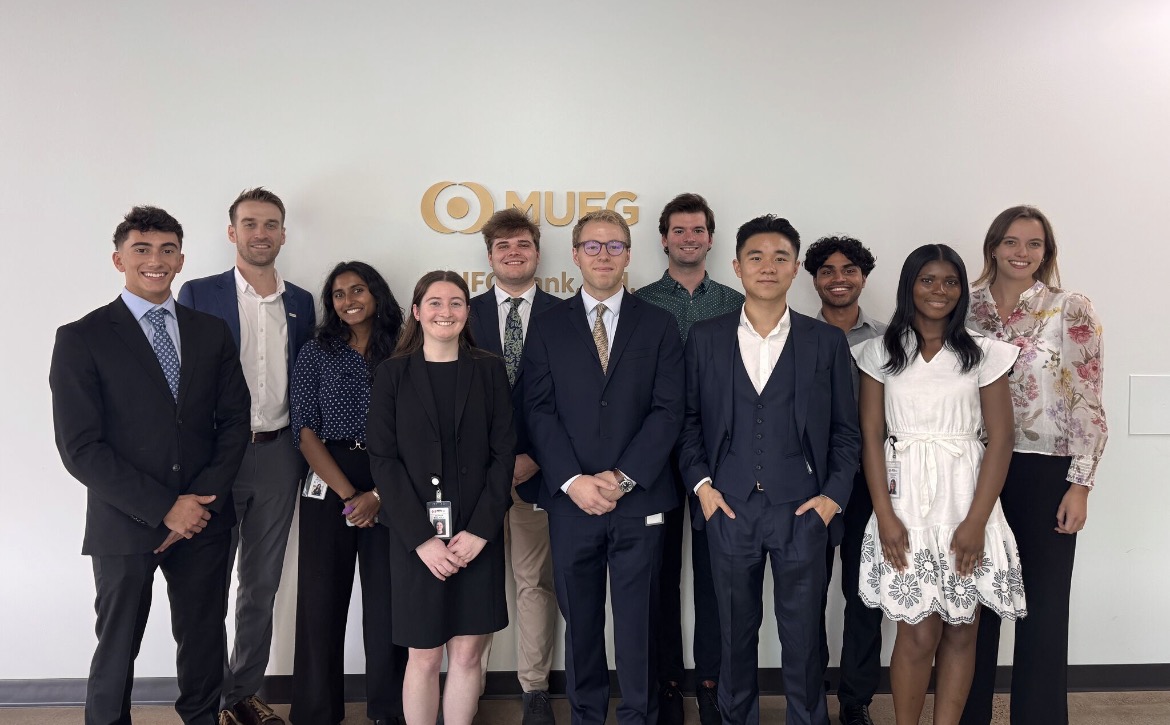
MUFG Bank, Ltd. Global Financial Crimes Compliance Intern
English and Writing & Rhetoric double major
One of the most valuable skills I gained from my internship experience was adaptability, particularly in learning how to apply my writing knowledge in areas I had not previously considered, such as emerging technologies and digital platform development. It challenged me to think more broadly about what it means to be a writer and where those skills can be valuable in the workplace.”
In Dr. Brad Lucas’s Technical and Professional Writing class, students are introduced to the profession of being a tech writer. The course
focuses on student projects and case studies that allow students to presents to "real
world" audiences and simulate workplace scenarios.
To expand on this learning, Advanced Tech Writing gives students the opportunity to integrate (primary and secondary) research, present
data, and practice document design.
In Dr. Alexandra Edwards’s Multimedia Authoring class, students plan, design, and build an off-grid emergency intranet system that could be used during natural disasters and other emergencies to disseminate information locally. This class gives students the skills to combine rhetoric with multimedia applications that can be used in professional environments.
Mat Wenzel’s Publication Production course teaches students to solicit, record, and publish oral histories from LGBTQ+ individuals about their experience in and around Fort Worth. Students write, edit, and print these histories in a chapbook with copies set aside for the community organization they worked with.
Dr. Stephen Boakye integrates experiential learning in his Introductory Composition class where students conduct panel discussion podcasts that require students to critically discuss topics, such as global issues, in a professional manner. Because students hold conversations about various topics that each of them propose, students are role-playing workplace scenarios that will be helpful to them in their future professional careers.
Dr. Charlotte Hogg embeds experiential learning in her Writing Major Seminar class where students create a campaign illustrating the writing major to an audience they choose. Students investigate a career and include an interview with someone in the field that they wish to work in. By educating others on a specific career path and conducting interviews, students gain skills that will be used in the professional world while getting a head start in researching their future career paths.
Dr. Ashok Bhusal encourages students to create multimodal group projects--a public service announcement, an infographic, a brochure, or a flyer--to cultivate awareness about topics related to their majors and future professions in his Writing Internship class. Through these assignments, students become familiar with organizations or businesses they would like to work with.
Additionally, through their internships, students receive real-life workplace experience from companies or agencies in publishing, advertising, or other fields. Duties are arranged to fit each student’s schedule, and work opportunities may include research gathering, editing, report writing, social networking, web authoring, or document production.
Dr. Chantel L. Carlson’s Publication Production class is an internship-style learning environment where students gain skills in literary magazine publication and basic web design. Students in the course work in every stage of the production of the semester’s print issue of eleven40seven, TCU’s undergraduate journal of the arts, and its web edition (www.1147.tcu.edu). Students build digital software skills along with publication skills that will help them in their professional careers.
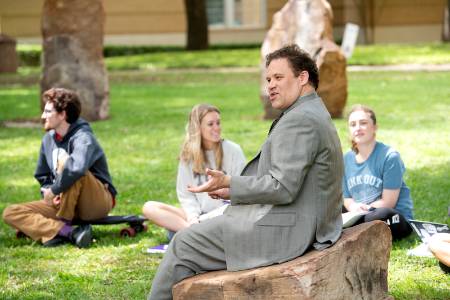
The range of Professor Matt Pitt's creative writing workshops build the skills of giving and receiving constructive feedback and developing editing skills. These two skill-sets are vital in many careers.
Dr. Curt Rode’s Coding in the Humanities class teaches students how to become web authors and develop argumentative skills in the context of public arguments. Students are introduced to the basics of a computer programming language (such as Python or R) and may obtain a Digital Publishing Certificate.
In Dr. Hannah Jorgenson’s Introduction to Digital Humanities class, students complete research projects where they have to identify an existing dataset and apply the appropriate tools to create create visualizations and communicate their findings on a project website.
In his Introductory and Intermediate Composition: Writing as Inquiry courses, Dr. Ashok Bhusal has students create multimodal group projects, such as posters, public service announcements, infographics, brochures, or flyers. These projects cultivate awareness about topics related to their majors and future professions, or organizations and businesses they would like to work for, based on their primary and secondary research.
Students in Dr. Sarah Robbins’s Nineteenth-Century Global American Literature course researched, wrote and edited content for a website entitled “Teaching Transatlanticism.”
Want to learn more?
Explore the different areas of Experiential Learning and see what our alumni are up to.